frequently asked questions

Appointments
I practice at The Old Rectory Clinic in Iron Acton, Bristol and offer appointments on Mondays, Wednesdays and Fridays, including evening appointments. When contacting to book an appointment please state your preference from the below options:
In-Person
Visit me at the clinic in Iron Action. A 15-minute telephone appointment is held prior to an initial consultation so that I can gain a better understanding of your problems prior to your appointment. This allows more time in the clinic to assess you and begin treatment.
Virtual
If you are happy with virtual assessment and treatment from the comfort of your own home then a full one-hour virtual initial consultation and assessment can be booked. Follow-up appointments can then continue to be virtual or converted to in-person if preferred.
Pricing
Prices are as follows:
- 15-minute telephone appointment: £20
- New patient consultation: £115
- New Mum Assessment: £115
- Standard follow-up
- appointment: (45 mins): £85
- Extended follow up appointment: (1 hour) £115
- Short Follow up appointment: £60
The above fees do not include supplies provided. Support belts etc will be charged at extra cost. Please ensure that you understand and consent to the terms and conditions before making an appointment.
Terms & Conditions
With your consultation fee, you buy the practitioner’s time during the consultation and for dictation and production of clinical letters that are sent to your GP or any other specialist involved in your care. It does not cover the production of letters and reports for insurance companies, solicitors and other third parties and these will be charged at £20 and require two weeks’ notice. Where possible, I will send reports and letters electronically. If you do not wish me to communicate in this way, please let me know at your initial appointment.
Any equipment/materials provided e.g. maternity support belts/coccyx cushions etc. are not covered within the consultation fee and will be charged separately. Similarly, telephone consultations will incur a fee and will be charged according to the time taken.
Payment
Fees are due for settlement in advance of your appointment; either on arrival if paying via cash or cheque, or in advance if paying via bank transfer.
Cancellation Policy
I operate a 24-hour cancellation policy, therefore if appointments are missed or cancelled with less than 24 hours’ notice please be aware that there will be a £60 fee payable for New Appointments and £40 fee payable for follow up appointments.
What can I expect from an initial assessment?
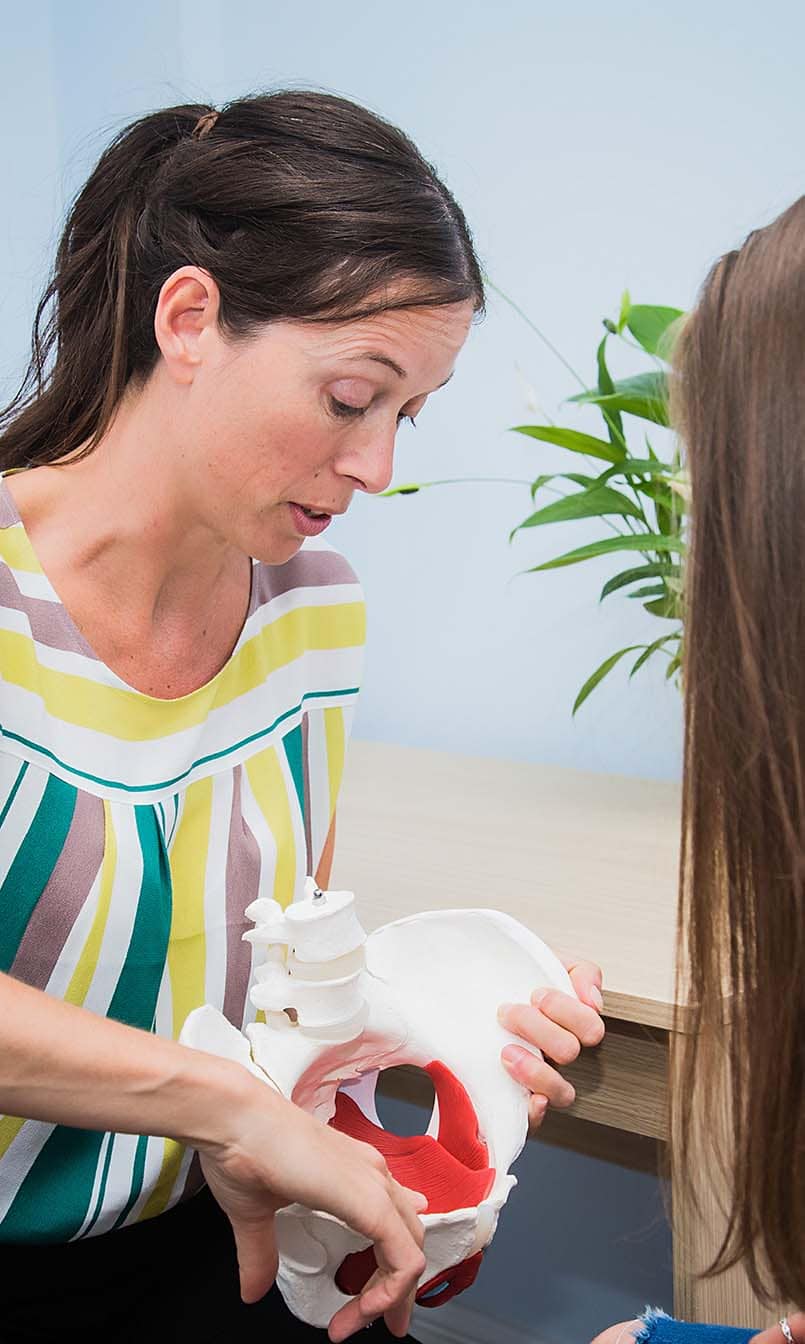
On arrival you will be welcomed into a private treatment room where a full, detailed, confidential history of your problems will be taken. It is important to find out not only the physical symptoms you may have but also how your problems started and are affecting your quality of life. Although this can sometimes be difficult to discuss it is a vital part in ensuring the right treatment and management for you.
If you are being seen for a pregnancy related problem, a full assessment of your back and pelvic joints would then follow. If you have a bladder/bowel or pelvic floor related problem, then you will be offered an internal vaginal or rectal examination to assess your pelvic floor muscles. This is an important part of the assessment so that the correct treatment can be offered for your condition but will only be carried out after I have spoken to you in depth about the examination. I understand how you may feel nervous about this part of the assessment and will give you as much reassurance and time as you need so to feel at ease. Following your assessment, and discussing your goals an individualised treatment programme and management will be discussed with you.
Your initial assessment and examination will take one hour with adequate time for you to ask any questions that you may have. If you are being seen for Chronic Pelvic Pain this process may take more than one session as it is important not to rush any aspect so that I can fully understand your pain.

Treatments used
I take a holistic approach with individually tailored treatments and uses a wide range of techniques during her sessions, which can include the following:
- Point of Contact Ultrasound (POCUS) for abdominal or transperineal scanning
- Education and advice about your condition
- Pelvic floor muscle re-education and training
- Pelvic floor manual therapy – stretching, lengthening, strengthening or relaxation of pelvic floor muscles
- Relaxation and breath training techniques
- Biofeedback
- Electrical muscle stimulation
- Bladder and bowel re-training
- Lifestyle changes such as fluid management, diet, exercise
- Specific tailored exercise programmes
- Advice and fitting of appropriate support belts in pregnancy
- Pelvic joint mobilisations
- Movement and Posture advice
- Stress management strategies
- Graded exercise and activity
- Graded exposure
- Pain management education
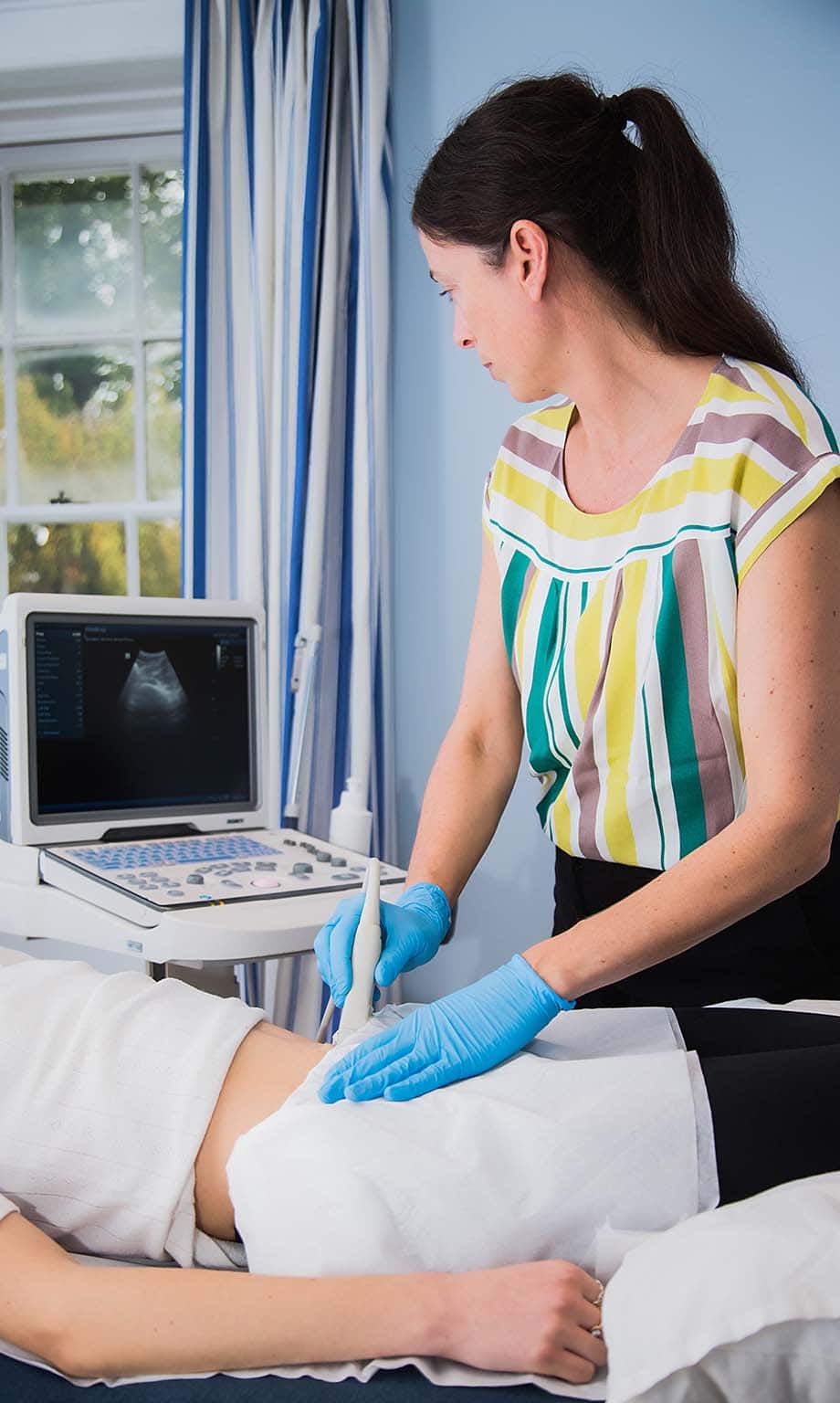
Point of Care Ultrasound
Point of Care Ultrasound (POCUS) within physiotherapy practice is the use of ultrasound imaging for the purpose of assessing the pelvic floor function and pelvic organ support. This is an adjunct to physiotherapy management and strictly used as an assessment and biofeedback tool during your physiotherapy session and is not used to diagnose pathology.
Not everyone will need this modality but if you find it really challenging to locate and connect to your pelvic floor muscles then you are not alone. The pelvic floor muscles are hidden inside you meaning your brain can have trouble working out how to find them because you can’t actually see them working. This is the barrier that can make rehabilitation difficult and frustrating and is often why people fail. POCUS can change this by providing an invaluable tool which allows us to visualise both your bladder and the movement of the pelvic floor to help you connect with the part of the body that is usually invisible to you. This form of biofeedback is like having a window into your own body allowing you to see the movement in real time at the same time as you feel for the movement and can give you a deeper understanding of your body.